FTTH / PON feeder pack
OS2 fiber cable, IP67 closures, labelled splice tray map, GPON / XGS-PON splitter ratio worksheet, and OTDR acceptance traces with end-to-end insertion-loss budget signed off before cutover.
SouthWire Pro solution bundles connect product selection, field notes, test requirements, and NOC documentation. Each bundle is built around the route: where it starts, what bandwidth it must support, how much power it carries, how it will be tested, and who owns it after cutover.
OS2 fiber cable, IP67 closures, labelled splice tray map, GPON / XGS-PON splitter ratio worksheet, and OTDR acceptance traces with end-to-end insertion-loss budget signed off before cutover.
Hybrid fiber-power for RRU and AAU, single-point grounding, DC power conductor sizing, IEEE 1588v2 timing handoff, and ORAN 7.2x split documentation for the DU and CU rack.
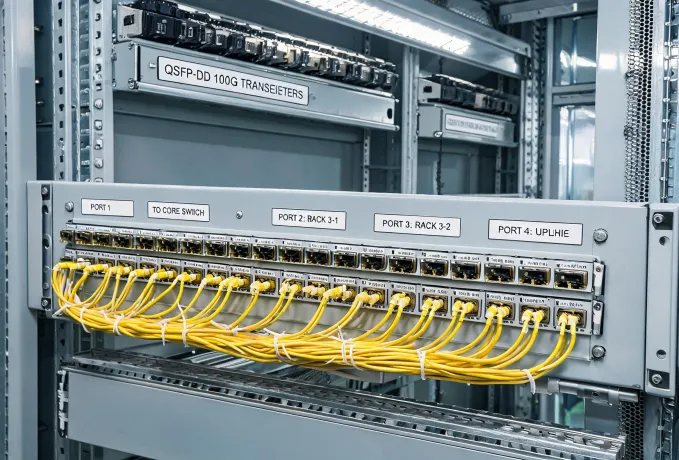
OS2, OM4, and Cat6A trunks with MPO-12 polarity discipline, pathway fill calculations, and QSFP-DD thermal margin notes for 100G, 400G, and an 800G upgrade lane.
Cat6A conductor sizing, bundle heat-rise tables for IEEE 802.3bt 90 W loads, voltage-drop calculations, and keystone labelling that survives an MAC move-add-change cycle.
N, SMA, and 4.3-10 connector preferences, IP67 weatherproofing, bend-radius enforcement, and PIM-sensitive routing notes calibrated to a -160 dBc target with a screened lot history.
Every pack starts from the route survey: distance in metres, environmental class (indoor cabinet, outside plant, riser, plenum), required throughput in Gbps, the connector form factor at each handoff (LC duplex, MPO-12, RJ45, N-female, SMA), and the compliance region (FCC, ETSI, ISED, MIIT). SouthWire Pro maps those inputs to specific cable jackets (LSZH, OFNP, CPR Cca-s1,d1,a1), conductor counts, and acceptance tests. The output is a single procurement BoM, a labelled cut sheet, and an OTDR / PIM / cold-flex test schedule the field crew can run without translating between specifications.
Once cutover is signed off, the same artefacts feed the NOC: a spare-cable inventory by jacket and length, a splice closure map keyed to GPS coordinates for outside plant, and a documented MTTR target per priority zone. That paperwork is the difference between a pack that ships and a pack that stays operational across upgrade cycles, including a future move from 100G to 400G ZR+ on the metro core.
We will translate them into a cable bundle, test checklist, and staged release approach that procurement and field teams can use.
Open Carrier-Onboarding Portal